All Recipes or Posts by osowakki

Show Recipe

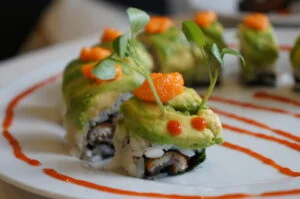
Atlantis sushi roll

Atlantis Roll

15.9 of 5

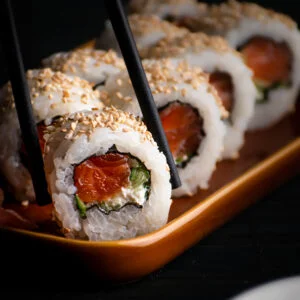
Looking for an extraordinary sushi recipe that’s sure to make a splash at your next dinner party? Look no further than the Atlantis Roll! This stunning sushi creation is packed...

Get Recipe

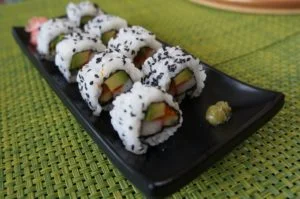
Philadelphia roll

Philadelphia roll

0 of 5

Who, Where, What is a Philadelphia Roll? Believe it or not, the Philadelphia roll gets its name from the city of Philadelphia Pennsylvania where it was first created. Contrary to...

Get Recipe

Salmon Maki

Salmon Maki Roll – What It Is & How to Make It Step by Step

5 of 5

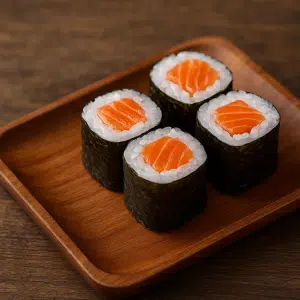
Salmon Maki, also known as Makizushi, is a beloved classic that has been enjoyed by sushi lovers for generations. It’s a perfect introduction to sushi for those new to the...

Get Recipe

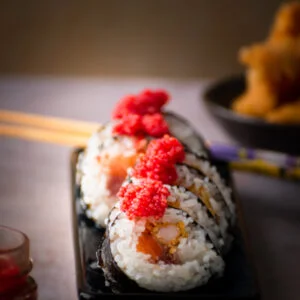
Halloween 'Coronavirus' Sushi

Halloween ‘Coronavirus’ Sushi

5 of 5 15 Minutes 1 roll

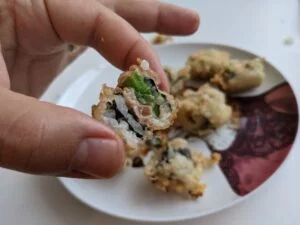
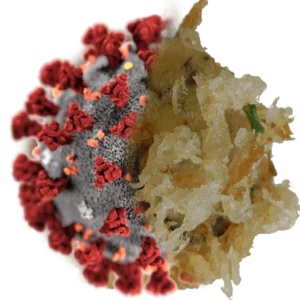
Why Coronavirus sushi? This year for Halloween I decided to make something really special. While most of us are still hugely impacted by the dreadful corona-virus, what could possibly make...

Get Recipe

Show Post

Quick & Clean Sushi at Home: The Revolutionary Baking Paper Method

Quick & Clean Sushi at Home: The Revolutionary Baking Paper Method

Introduction:

The transition from rice preparation to sushi rolling is notoriously messy and time-consuming, often slowing down home chefs and taking a chunk of the fun out of the sushi-making process. But what if there was a way to bypass the sticky fingers and scattered ingredients? Enter the baking paper method—a quick, clean, and efficient way to prepare sushi at home. This technique ensures that once you’re ready to roll, everything from the rice to the fillings is perfectly in place, allowing you to create beautiful sushi without the usual hassle and mess.

Step-by-Step Guide:

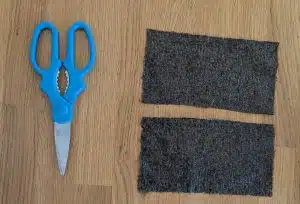
Step 1: Size Your Baking Paper

Prepare Your Paper: Start by sizing your baking paper to match the nori sheets you plan to use. If you’re using half a nori sheet, cut your baking paper to the same size. This ensures that your sushi rice will fit perfectly on the nori without any overhangs or shortages, creating the ideal base for your rolls.
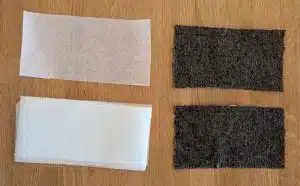
Step 2: Prepare Multiple Sheets

Ready Your Supplies: Depending on how many rolls you intend to make, prepare the same number of baking paper sheets. Having all your sheets cut and ready streamlines the process, allowing you to maintain a steady workflow without interruptions for cutting more paper.
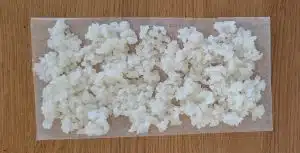
Step 3: Apply the Sushi Rice

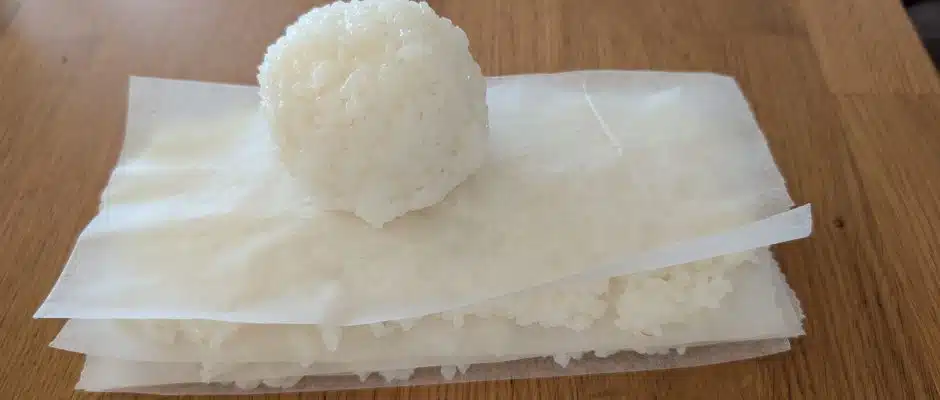
Layer the Rice: Evenly spread the sushi rice over each sheet of baking paper. Use just enough rice to cover the paper, which should be the right amount for each roll. This step is crucial for achieving uniformity in your sushi rolls, ensuring each bite is as good as the last.
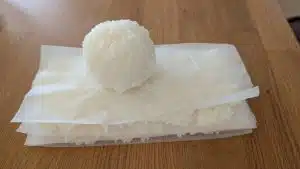
Step 4: Stack and Store

Organize for Efficiency: Once each baking paper sheet is covered with rice, stack them on top of each other. This method not only saves space but also keeps the rice sheets ready to be used. You can easily access the rice sheets one by one as you assemble your sushi rolls, keeping the process neat and orderly.
Step 5: Transfer the Rice

Flip and Align: Carefully flip the rice-covered baking paper onto your sheet of nori. Ensure the rice is evenly aligned with the edges of the nori for a perfect roll. This step helps in creating a seamless layer of rice, essential for well-formed sushi.
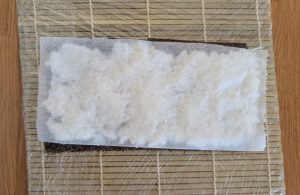


Step 6: Peel Away the Paper

Reveal the Rice Layer: Gently peel off the baking paper from the rice. This should leave a beautifully even layer of sushi rice on the nori. The non-stick nature of baking paper makes this step satisfyingly simple, maintaining the integrity of your rice layer without any sticking.
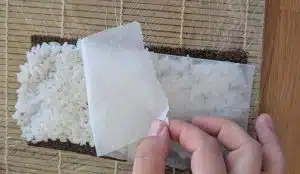
Step 7: Ready to Roll!

Efficient Rolling: With your nori now perfectly covered with rice, you’re ready to add your fillings and roll. What typically takes 1-2 minutes of spreading rice and cleaning sticky hands, you’ve completed in just about 3 seconds using this method. This not only makes the sushi-making process cleaner but also significantly faster, allowing you more time to enjoy your creations.
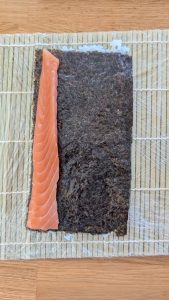
Conclusion: Effortless Sushi Rice Application

Enjoy the Simplicity: With the rice now perfectly covering the nori, you’ve achieved a clean, uniform base for your sushi roll in just seconds—and your hands are still clean! This technique significantly reduces the mess typically associated with sushi making, allowing you to enjoy the process and the eating all the more.

This approach not only enhances the efficiency of making sushi at home but also makes the process more enjoyable by minimizing cleanup and preparation time.


 

Savoring Tradition: The Hidden Delight of Saba Bo Sushi

Savoring Tradition: The Hidden Delight of Saba Bo Sushi

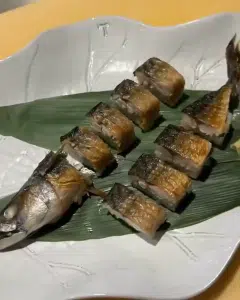
If you think you’ve tasted everything the sushi world has to offer, let me introduce you to a culinary gem that might have slipped under your radar: Saba Bo Sushi. This pressed mackerel sushi breaks away from the familiar rolls and nigiri, offering bold flavors and a meticulous preparation that promises a unique and unforgettable dining experience.

History and Tradition

Saba Bo Sushi is more than just a dish—it’s a journey back in time to ancient Japan. Centuries ago, preserving fish was both an art and a necessity. Chefs discovered that vinegar not only extended the shelf life of mackerel but also enhanced its natural flavors. By pressing vinegared mackerel over seasoned rice and occasionally adding a delicate layer of kombu (kelp), they created a dish that was both practical and delectable. This method intensified the fish’s taste, embedding Saba Bo Sushi firmly in the tapestry of traditional Japanese cuisine.

The Art of Preparation

Crafting Saba Bo Sushi is a labor of love that demands precision and care. It starts with the freshest cured mackerel and perfectly seasoned rice. The mackerel, rich and shimmering, is carefully layered atop the rice. Using a wooden mold called an oshizushihako, the sushi is gently pressed into a compact block. This technique isn’t just about shaping; it’s about melding flavors and textures into harmony. The pressing process infuses the tangy vinegar notes with the umami depth of the mackerel, resulting in a mosaic of taste that’s then sliced into bite-sized pieces—each one a testament to culinary artistry.

A Taste to Remember

Your first bite of Saba Bo Sushi is nothing short of revelatory. The tang of vinegar greets your palate, quickly followed by the savory richness of the mackerel. The rice adds a subtle sweetness, tying all the flavors together in a harmonious blend. The texture is equally captivating—the firm pressed rice contrasts with the silky, melt-in-your-mouth quality of the mackerel. It’s a sensory experience that lingers, inviting you to savor every nuanced note.

Witness the Craftsmanship

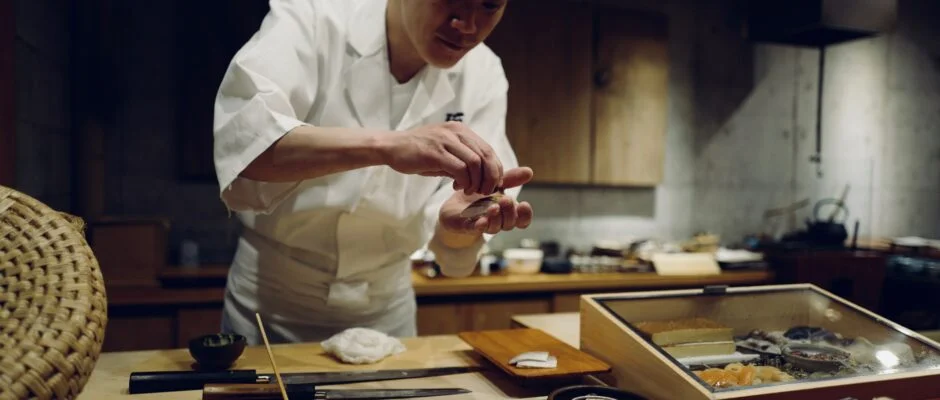
Watching a skilled chef prepare Saba Bo Sushi is like observing a well-rehearsed dance. Each step, from curing and slicing the mackerel to pressing and slicing the sushi, is performed with deliberate care. The chef’s hands move with confidence and grace, highlighting a deep respect for tradition and ingredients. If you ever have the chance to watch this process—whether in person or through a captivating video—seize it. It offers a deeper appreciation for how simplicity and complexity intertwine in Japanese cuisine.

Have you ever had ‘Saba Bo’ Sushi?
byu/Comprehensive-Pen-93 inFoodVideoPorn

Why You Should Try It

In a world where sushi has become global and sometimes gimmicky, Saba Bo Sushi stands as a beacon of authenticity. It’s often overshadowed by its more popular cousins like California rolls or tuna nigiri, but those who seek it out are rewarded with a flavor profile that’s both robust and refined. Trying Saba Bo Sushi is like tapping into a piece of history—a culinary tradition that has been perfected over generations. Whether you order it at an authentic sushi bar or take on the rewarding challenge of making it at home, it’s a must-try for anyone passionate about sushi.

Conclusion

Saba Bo Sushi isn’t just another item on a sushi menu; it’s a heartfelt expression of Japanese culinary heritage. If you’re ready to expand your sushi horizons and indulge in something truly special, let this be your next gastronomic adventure. Its distinctive preparation and memorable flavors not only set it apart but also earn it a cherished spot in any food lover’s repertoire. So go ahead—embrace the tradition, savor the flavors, and let Saba Bo Sushi captivate your senses.

Irasshaimase! What It Means (and How to Reply in Japan)

Irasshaimase! What It Means (and How to Reply in Japan)

What do they yell when you enter a Japanese restaurant?

You should be familiar with some Japanese phrases whether you’re dining with newly made Japanese friends, dining at a Sushi bar, or having a lunch meeting with a new Japanese customer. The majority of Japanese will forgive you if you do not grasp their practices and traditional words, but you display excellent manners and respect to others by adopting standard etiquette. “Irasshaimase” is an example of such a phrase.

Most travelers encounter the phrase “Irasshaimase!” (いらっしゃいませ!), which translates as “Welcome to the business!” or “Please come in!” within minutes of arriving in any Japanese restaurant. It is simply one of the numerous traditional Japanese techniques of extending a warm welcome to new clients on a formal basis. After saying Irasshaimase, the waitress or waiter will inquire about the number of individuals in your group before escorting you to your assigned table.

If you have ever traveled to Japan, you will be familiar with the phrase. Not once, but on numerous occasions. Several times over, its pitch can fluctuate from high and short to low and gruff, depending on the situation. The phrase is universal whether spoken by a single female staffer at a prestigious department shop or a group of chefs at a run-down Ramen restaurant. At any time of day or night, you can hear it shouted with complete apathy, or it can be said with great enthusiasm, volume, and joy of life that you could think you have accidentally walked into your own Japanese birthday bash.

What does Irasshaimase mean?

The question is, though, what the word actually means and where it came from. The phrase “Irasshaimase!” is a more formal variant of the phrase irasshai, which is an imperative version of the polite verb irassharu (), which literally translates as “to be/come/go.” The ‘mase’ ending is frequently put to the end of words in order to make them more courteous. It is simple to believe, given the fact that there are so many other methods to be friendly, why not add one more to the list? Marketplace vendors first used the phrase to get customers to come to their particular stand in a marketplace.

Over time, it has evolved into a standard greeting that can be found in practically every restaurant and retail outlet throughout Japan. Customers can hear it from outside supermarkets, inside shops, at checkout counters, petrol stations, the sale stands, and wherever else that staff has the opportunity to shout it out.

What do you have to say in response to Irasshaimase?

You are under no obligation to react; however, you can simply use a customary greeting like

  • Ohayo gozaimasu. (It means Good morning)
  • Konnichiwa (it means Hello in the daytime)
  • Konbanwa (it means Good evening).
  • Alternatively, you might simply nod as a casual bow.

Irasshaimase is simply a greeting you get when you walk into a restaurant or a store. You are under no obligation to tell anything. No, there isn’t any expectation on your part that you will answer.

Why make sushi at home?

Why make sushi at home?

Why Make Sushi At Home?

If you’re looking for fun ways to make this weekend special, whether for a group of close friends or a cool, unique, date-night activity, making sushi at home is the perfect activity for a unique get-together. Going out to sushi is amazing, but it can be expensive and crowded, with long wait times and not a lot of choices. Sushi making at home is a fun skill to learn, that you can share with your friends and family. If you have the right tools, a little background information, and don’t care about getting your kitchen slightly messy, at-home sushi making might just be your next favorite weekend activity.

It’s Chefs Choice, And You Are The Chef

The great thing about making sushi at home is that you get to choose what you want in your roll. This is great for those of us who have specific dietary needs and/or want to pick just exactly what is going into your rolls and onto your nigiri. When having a group over for a sushi-making night, ask what they’d like in their rolls, get as creative as you want, with spicy mayo, ponzu sauce, and lots of soy sauce.

What You Need To Make Sushi At Home

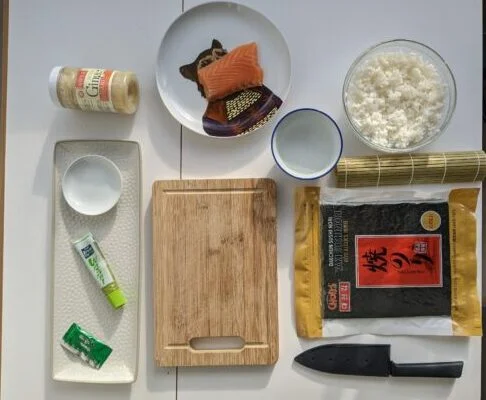
You don’t need a sushi recipe per se, however, there are things you’ll need to make your sushi night successful. Many websites sell sushi-making kits, including Make My Sushi, which has bamboo sushi rolling mats, which are essential for rolling the seaweed, around the rice and your choice of filling. These kits also come with chopsticks, rice paddles, and rice spreaders although if necessary you could probably use what you have on hand. Your sushi rice recipe is also important, sushi rice is often confused with white rice, but in reality, they’re quite different. Rice vinegar is what gives sushi rice its delicious and unique flavor, it also makes it a bit stickier which helps you to create your rolls.

Your Sushi Fish Must Be High Quality

One of the most important things to realize when making sushi at home is that the quality of fish must be sashimi or sushi-grade. This keeps you from making rolls that taste overly fishy or even worse could make you sick. If you’re just starting, consider trying a veggie roll, with slivered carrots, cucumber, avocado, and just about anything else that you can think of.

Technique For Sushi Making

Remember, like any new skill you’re going to get better with time, so don’t get discouraged if it doesn’t look perfect on your first try. Part of the fun of sushi making is that some of your rolls will look professional and others, maybe not so much. Be sure to have a can-do attitude and laugh it off if one of your rolls falls apart. When you’re making your roll, time is of the essence, the longer the rice sits on top of seaweed the more wilted it will become and the harder it will be to roll.

Sushi making is an incredible activity for friends and family, and we can’t wait to see what you create!